Best Multi-Person Hot Tubs for Backyard Hydrotherapy
Table of Contents
- What Makes a Multi-Person Hot Tub Right for Your Backyard
- Choosing the Best 4-5 Person Hot Tub for Your Space
- Understanding Hot Tub Water Capacity and Comfort
- Hot Tub Jet Placement and Hydrotherapy Benefits
- Backyard Hot Tub Installation: What You Need to Know
- Seating Layouts and Ergonomic Design
- Operating Costs and Long-Term Ownership
- Frequently Asked Questions
Last Updated: October 12, 2026
What Makes a Multi-Person Hot Tub Right for Your Backyard
A multi-person hot tub accommodates four or more people comfortably, using strategically placed jets and heated water for a relaxing soak. At RejuvaZone, we help customers match capacity, jet placement, seating comfort, and backyard layout to create a functional wellness space.
The appeal is straightforward: instead of commuting to a spa facility, you build relaxation into your home. Families use them for quality time; fitness enthusiasts use them for post-workout routines. Choose one that fits your space, group size, and comfort expectations.
Most buyers focus only on how many people fit. A tub that seats five on paper may feel cramped if the layout forces everyone upright with no lounging space. Water capacity matters too, and jet placement determines whether the massage targets the areas you want: back, shoulders, hips, or feet.
Choosing the Best 4-5 Person Hot Tub for Your Space
A 4-5 person hot tub suits most residential backyards: large enough for a small family or friend group without extensive site preparation. This category includes both inflatable and hard-shell options, each with different trade-offs.
Hard-shell models like the El Dorado offer permanent installation, consistent structural support, and more sophisticated jet systems. Inflatable models like the MSPA Oslo provide portability and lower upfront investment. The choice depends on whether you want a long-term wellness space or flexibility.

When evaluating 4-5 person options, look at actual seating positions. Some models pack five seats into a tight footprint using only upright positions; others trade one seat for a lounging area. For relaxation, lounging space matters more than maximum headcount.
Understanding Hot Tub Water Capacity and Comfort
Water capacity is one of the most misunderstood specs on a hot tub listing. Gallons tell you how much water the shell holds, but not how many adults sit comfortably, how deep you'll be submerged, or how the tub behaves once full and running.
The gap between advertised capacity and real-world capacity comes down to three things: seat type, seat depth, and the footprint of the shell itself.
Advertised vs. comfortable capacity. A tub marketed as a 6-person model may list six seating positions, but if two are a lounge and a cool-down seat, fewer people can soak upright at once.
Seat depth and water line. Deeper seats let you sink to the shoulders; shallower seats leave your upper back above the water line. For soaking, the water line relative to your shoulders matters more than total gallons.
Gallons and heating behavior. More water takes longer to heat and recover after the cover comes off, but holds temperature more steadily and dilutes chemicals more slowly. Smaller volumes heat faster but swing more quickly. Which is "better" depends on how you use the tub.
Water care scales with volume and use. Chemical demand tracks bather load and water volume together. A large tub used by two people may need less adjustment than a small tub used by six.
How to compare capacity specs side by side. When comparing two multi-person models, pull these numbers from each product page:
- Seating positions (total) and how many are lounge vs. upright
- Interior depth or shell height
- Water capacity in gallons
- Dry weight and filled weight
- Footprint dimensions (length x width x height)
Filled weight matters for installation and is easy to overlook. Water weighs roughly 8.3 pounds per gallon, so a tub holding several hundred gallons adds thousands of pounds to whatever surface it sits on, before bathers.
The El Dorado is built around deep seating, which most affects how submerged you feel during a soak. Check its product documentation for published dimensions and water capacity to compare it against other models on the same terms.
Hot Tub Jet Placement and Hydrotherapy Benefits
Jet placement is where the massage experience actually happens. A tub with 12 jets scattered randomly delivers less targeted relief than one with 8 jets positioned for back, shoulder, and hip areas.
Effective layouts include jets at mid-back height for the lumbar region, shoulder-height jets for upper back and neck tension, and hip-level jets for lower body relief. Some models add foot jets. The El Dorado is designed with strategically placed jets targeting key muscle groups, and its adjustable pressure system lets you control intensity.
Jet placement matters more than total jet count. A tub with 20 poorly positioned jets will frustrate you; one with 10 well-placed, adjustable jets delivers the experience you want. When comparing models, ask where the jets sit and whether they're adjustable. Fixed jets work if the placement matches your body; adjustable ones adapt to different users.
Backyard Hot Tub Installation: What You Need to Know
Installation is where a hot tub purchase becomes either a smooth addition to your routine or a months-long project.
Start with the delivery path, not the destination. Before choosing a model, walk the route a delivery crew would take from the street to the final spot. Inflatable models like the MSPA Oslo ship in a box and can be carried through spaces a hard-shell tub cannot.

Foundation and surface. Hard-shell tubs need a level, load-bearing surface. Options include a poured concrete pad, a reinforced deck rated for the filled weight, or a compacted and leveled base of crushed stone or pavers.
El Dorado Hot Tub - 5-Person Deep Comfort for Full-Body Hydrotherapy →
Electrical planning. Hot tubs generally fall into two categories: models that run on a standard household circuit and models that require a dedicated higher-voltage circuit installed by a licensed electrician.
Permits and local rules. Many municipalities require a permit for hot tub installation, and rules vary widely on setbacks, fencing, and electrical work. Check with your local building department before delivery.
Drainage and water management. Plan where water goes when you drain the tub for cleaning or refills. Water pooling against the shell or foundation is a problem over time.
Clearance for service. You need room to reach the equipment panel, remove and clean filters, and access the pump. Required clearance varies by model, so follow the installation guide for your specific tub rather than a generic number.
Climate considerations. In colder regions, insulation, a fitted cover, and a sheltered location affect how hard the heater works to hold temperature. In hotter regions, shade and ventilation around the equipment can matter.
A practical pre-purchase checklist. Before committing to a model, confirm each of these:
- The delivery path is wide enough and clear of overhead obstacles
- The surface is level and rated for the filled weight
- You know whether the model needs a standard or dedicated circuit, and whether your panel can support it
- You have checked local permit and setback requirements
- You have a plan for draining and refilling without pooling water
- You can reach the equipment panel and filters for routine service
The El Dorado requires following its specific installation and electrical documentation; check the product page and manual for the requirements that apply to your setup.
Seating Layouts and Ergonomic Design
Comfort during use determines whether you'll use your hot tub regularly or it becomes an expensive decoration. Seating layout is the biggest factor in real-world comfort.
Upright seats work for casual soaking and conversation. Lounge seats let you recline and submerge your back and shoulders. The best multi-person layouts include both, perhaps three upright seats for socializing and one or two lounging positions for relaxation.
Seat depth matters too. Shallow seats force you to stay upright. Deeper seats let you sink back and let the water support your weight. This is where the El Dorado's design philosophy shows its strength, deep seating that accommodates full-body immersion.
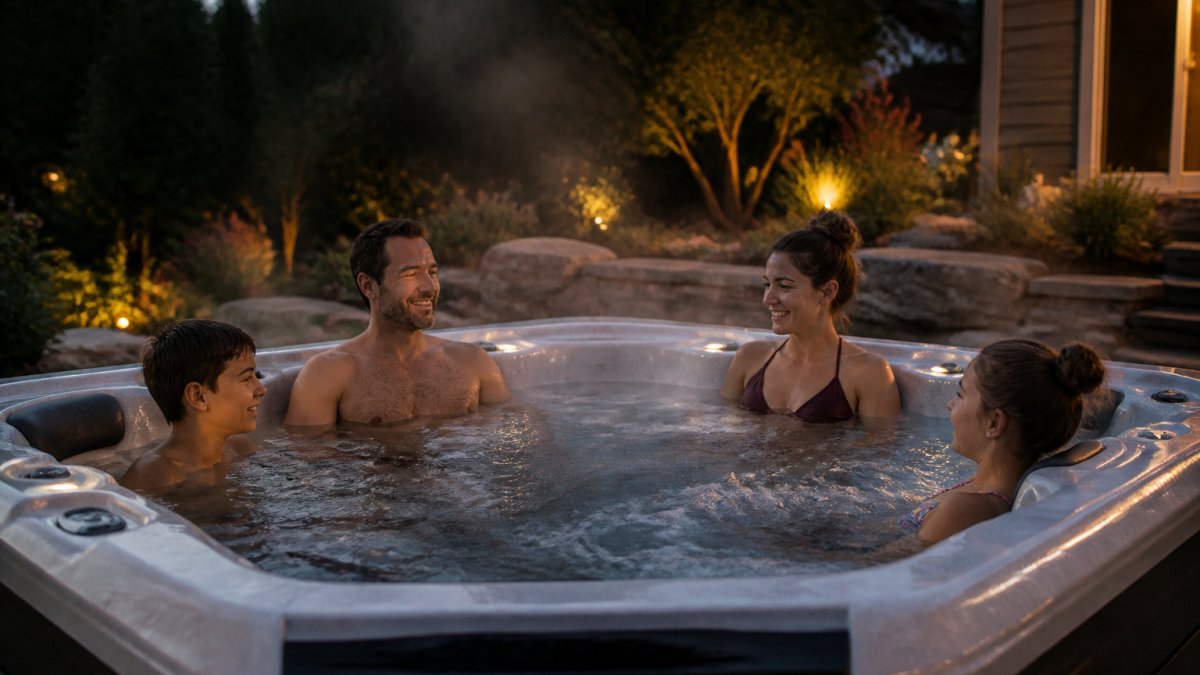
Backrest angles vary across models. Some are vertical; others angle backward to support reclining. Test this if possible, since what feels supportive to one person may feel uncomfortable to another. A properly angled backrest can make the difference between a relaxing experience and one that leaves you sore.
Operating Costs and Long-Term Ownership
Hot tub ownership includes heating, circulation, and water treatment costs. These add up over time, so understanding them upfront matters.
Heating costs depend on your climate, how often you use the tub, and how efficiently it maintains temperature. A well-insulated tub in a warm climate costs less to operate than one in a cold region. Many owners find regular use justifies the energy investment, especially if they're replacing spa facility visits.
Water treatment requires chemicals to maintain pH balance and prevent algae growth. Budget for ongoing chemical costs and filter replacements.
The El Dorado is engineered with energy efficiency in mind, designed to reduce operational costs while maintaining consistent water temperature. The MSPA Oslo includes app-based management through MSpa Link 2.0, which lets you schedule heating and circulation to minimize energy use during off-peak hours.
Long-term durability affects total ownership cost. The materials, pump quality, and shell thickness all influence how many years you'll get from your investment. Higher-quality construction costs more upfront but spreads the cost across more years of use.
Factor |
Impact on Cost |
How to Minimize |
|---|---|---|
Heating |
Largest ongoing expense |
Insulation, covers, efficient pumps |
Water treatment |
Ongoing maintenance |
Good circulation, regular testing |
Filter replacements |
Varies by model and usage |
Follow manufacturer recommendations |
Repairs |
Variable, depends on durability |
Quality construction, proper installation |
Choosing the best multi-person hot tub for backyard relaxation means balancing seating comfort, effective jet placement, practical installation, and operating costs. The El Dorado delivers deep comfort and sophisticated jet placement with quality construction. The MSPA Oslo offers flexibility and modern app-based controls for easier management. Explore the options that match your backyard layout and wellness goals, and you'll build a relaxation space that becomes part of your routine. Shop RejuvaZone's multi-person hot tubs and create your personal outdoor wellness oasis.
Frequently Asked Questions
How many people can comfortably fit in a four- or five-person hot tub?
A four-person hot tub typically seats four adults comfortably with adequate space for movement and jet access. A five-person model offers more room for relaxation and is often preferred when you plan to use it regularly with a partner or small group. Comfort depends on the actual seating layout—some models prioritize lounge seats while others focus on upright seating. Check the specific seat configuration and dimensions rather than relying on the person count alone, as real-world comfort varies based on body size and preferred seating position.
What should you consider when planning a backyard hot tub installation?
Evaluate your available space, ground stability, and proximity to power sources and water supply. Ensure the location has adequate drainage and can support the weight of a filled hot tub. Check local building codes and HOA restrictions before installation. Consider sun exposure, wind protection, and privacy. You'll also want to verify that access paths are wide enough for delivery and setup. Many manufacturers provide installation guidance, and professional assessment of your specific site can help prevent costly mistakes.
How do hot tub seating and jet placement affect the soaking experience?
Jet placement determines which muscle groups receive hydrotherapy benefits. Strategically positioned jets target the back, shoulders, hips, and feet. Upright seats typically have jets aligned with the spine and upper body, while lounge seats position jets for lower back and leg relief. Adjustable jet pressure lets you customize intensity. The seat layout should support your preferred soaking position—whether you want to sit upright for conversation or recline for deeper relaxation. Testing different configurations helps ensure the model matches your wellness goals.
What's the difference between inflatable and hard-shell hot tubs for backyard use?
Hard-shell hot tubs offer greater durability, better insulation, and more sophisticated control systems. Inflatable models are more portable and require minimal installation, making them suitable for renters or those with limited space. Inflatable models are generally easier to set up and move, while hard-shell tubs typically require more site preparation and installation planning. Maintenance requirements vary by model and system. Choose based on your permanence plans, available space, and desired hydrotherapy performance.