How to Choose a Home Hot Tub for Relaxation in 2026
Table of Contents
- Start With Relaxation: A Simple Decision Framework
- Hot Tub Size Guide: Seats, Water Capacity, and Household Needs
- Hot Tub Features for Relaxation: Jets, Seating, and Controls
- Hot Tub Installation Requirements: Space, Power, and Site Prep
- Questions to Ask When Buying a Hot Tub
- Budget, Operating Costs, and Water Care
- Conclusion
- Frequently Asked Questions
Last Updated: October 8, 2026
Start With Relaxation: A Simple Decision Framework
Learning how to choose a home hot tub for relaxation starts with one question most buyers skip: what do you want the water to do for you? Answer that first, and every other decision gets easier.
Name it: quiet solo soaks after work, weekend time with family, or a shared ritual with a partner? Rank your priorities before you shop, and the shortlist builds itself.
Rank Your Priorities Before You Shop
Score each item from 1 to 5, with 5 being most important:
- Relaxation quality - quiet operation, comfortable seating, gentle jets
- Seating capacity - how many people soak at once, most days
- Installation fit - where it goes and what that spot allows
- Ongoing care - how much water maintenance you'll accept
Whichever item scores highest should drive your search.
Hot Tub Size Guide: Seats, Water Capacity, and Household Needs
A hot tub size guide should start with people, not gallons.
For a family of four, a five- or six-person tub usually fits well.

Water capacity matters: more water takes longer to heat and more care to balance, while less water heats faster and costs less to maintain.
Smaller tubs fit tighter spaces. Measure your spot, then subtract room to walk around the shell and lift the cover.
Hot Tub Features for Relaxation: Jets, Seating, and Controls
The features that matter most for relaxation are the ones you'll touch every soak: seat shape, jet placement, and control access. Look for jets that target the neck, shoulders, and lower back, with adjustable pressure.
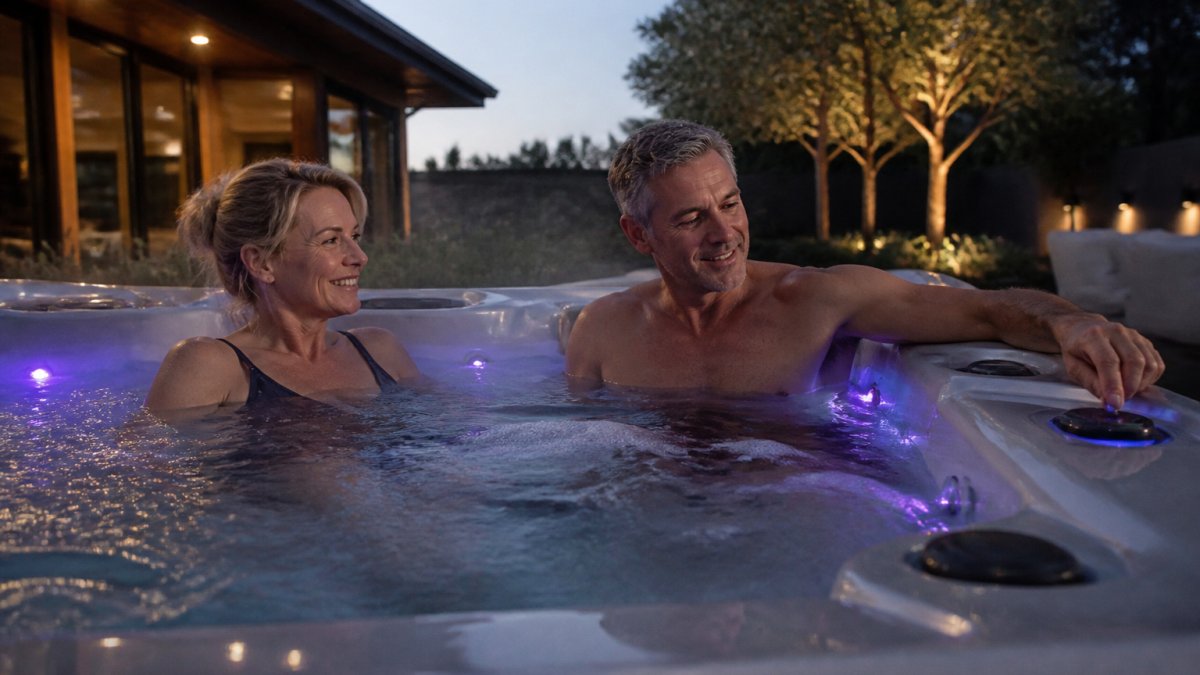
Ergonomic seating matters as much as jet count.
Controls should be simple. For example, the MSPA OSLO Frame Series pairs hydromassage jets and variable air bubbling with a foldable OLED touch screen and app control, so you can adjust settings without leaving your seat.

Hot Tub Installation Requirements: Space, Power, and Site Prep
Hot tub installation requirements come down to three things: a level surface, a power source, and enough clearance to service the equipment. Sort these before you buy, not after. If relaxation is the goal, there's a fourth consideration most guides skip: whether the spot you've chosen actually feels restful once the tub is in it.
The Base Comes First
Site preparation starts with the surface. A hot tub full of water is heavy, so it needs a flat, load-bearing base such as a reinforced deck, concrete pad, or purpose-built gravel bed. The right choice depends on your yard, your soil, and what your model's manufacturer specifies for structural support, so check that documentation before you build.
Power: Match the Model, Not a Guess
Electrical requirements vary by model and configuration. Some plug into a standard household outlet; others need a dedicated circuit installed by a licensed electrician. The only reliable source for your model's requirements is the manufacturer's documentation, so don't assume or wire it yourself. If the spec sheet isn't clear, ask the dealer in writing before you buy.
Access and Service Clearance
Plan for access on two fronts. First, the delivery path: measure gates, stairs, and turns along the route to your pad. A tub that can't reach the backyard is a problem no feature list can fix. Second, service access: leave room to open the cover, reach the control panel, and get to the pump and filter. Indoor installation also needs ventilation and moisture control; outdoor installation needs a spot that drains well.
- Level, load-bearing base rated for the filled weight
- Power supply matched to the model's documented requirements
- Clearance for cover lift, controls, and service access
- A delivery path wide enough for the shell
Accessibility: Plan for Every Body That Will Use It
If anyone in the household has mobility considerations, or you simply want the tub easy to enter after a long day, plan for it at the site-prep stage rather than retrofitting later:
- Steps - a wide, stable set of steps with a textured surface makes entry easier and more confident.
- Handrail - a sturdy rail positioned where you actually reach for it, not where it looks symmetrical.
- Seat height - sit in the dry tub and note how far you have to lower yourself. Higher seats are easier to get out of.
- Path lighting - low-level lighting along the walkway reduces the chance of a misstep after dark.
These are comfort and convenience features as much as safety ones, and they're easier to design in than to add later.
Set Up the Space for Relaxation, Not Just the Tub
The tub is one part of a restful home setup. The rest is the environment around it:
- Privacy - fencing, plantings, or a screen. A tub that feels overlooked is a tub you use less.
- Shelter - a pergola, awning, or partial enclosure can extend usable evenings and cut wind chill without fully enclosing the space.
- Lighting - warm, dimmable lighting beats a single bright fixture. Keep it low and indirect.
- Noise - locate the tub away from street noise, HVAC equipment, and the neighbor's bedroom window. Pump and jet noise also matter; listen to a running model before you commit.
None of these require a big budget, but they change how often you actually use the tub. Treat them as part of the purchase, not an afterthought.
MSPA | OSLO | Frame Series | Rigid Hot Tub & Spa | Light up the night | Upto 6 →
Questions to Ask When Buying a Hot Tub
The questions to ask when buying a hot tub should cover the soak, the support, and the long haul.
Then ask about support: who handles delivery and setup, what the warranty covers and for how long, and how you get parts if something fails in a few years. Finally, ask about care: what the water treatment system requires and how often filters need attention.
How to Test a Tub Before You Buy
Testing a tub before you buy means getting in one, ideally wet. Many dealers offer a wet test, and it's worth asking for: dry testing tells you about seat shape, while a wet test tells you about buoyancy, jet feel, and noise.
Ask whether you can bring a partner, since two people in a tub feel very different from one, and note how the controls respond.
Budget, Operating Costs, and Water Care
A home hot tub budget has two parts: what you pay up front and what you pay every month after. Buyers who plan only for the purchase price get caught by the second number, so build a total-cost-of-ownership picture before you shop and compare models on the same footing instead of reacting to sticker price alone.
The Up-Front Side
The purchase price is only one line. The others:
- The tub itself - shell, cabinet, cover, and the equipment that ships with it.
- Delivery and placement - varies with distance, access, and whether a crane or removal of a fence section is needed. Ask for this in writing before you commit.
- Site prep - the base. A reinforced deck, concrete pad, or engineered gravel bed each carry different material and labor implications. Get quotes for your specific yard.
- Electrical work - if the model needs a dedicated circuit, a licensed electrician handles it. The cost depends on your panel, the run length, and local permit requirements. Never wire it yourself.
Because delivery, prep, and electrical vary so widely by home, these numbers cannot be estimated from the tub's price tag. Collect quotes for your address.
The Ongoing Side
Operating costs come from three places:
- Heating - the largest variable. It depends on insulation quality, the heating system, the cover's fit, the ambient air temperature where the tub sits, and how often the cover is off.
- Filtration and circulation - pumps run on a schedule set by the manufacturer; the energy draw depends on the model.
- Water care - chemicals, test strips, and replacement filter cartridges.
Energy efficiency is where models separate. A well-insulated tub with a fitted, well-sealed cover holds heat better between soaks, which tends to show up on your utility bill. When comparing, ask for documented insulation details and heating specifications rather than a general efficiency claim.
Water Care: Match the System to Your Tolerance
Water care is the ongoing chore, and the right system is the one you'll actually keep up with. Main approaches:
- Chlorine or bromine - traditional sanitizers. Effective and widely understood, but require regular testing and dosing.
- Salt water systems - generate sanitizer from salt in the water. Some owners find the water feel gentler; the system still needs monitoring and occasional cell care.
- Ozone or UV assist - supplemental oxidation that can reduce sanitizer demand when paired with a primary sanitizer. Not a replacement for one.
The exact testing and dosing schedule depends on your model, your water source, and how often you soak. Follow your manufacturer's guidance rather than a generic routine, and ask the dealer to walk you through the system before you buy.
Maintenance and Durability
Maintenance and durability tie together. Compare documented cabinet materials, shell construction, insulation type, and pump and heater specs side by side, then check what the warranty covers and how parts are sourced if something fails years down the road.
| Cost Category | What It Covers | How to Plan |
|---|---|---|
| Purchase price | Tub, cover, included equipment | Compare documented features, not tiers |
| Delivery and placement | Transport, crane, access work | Get a written quote for your address |
| Site prep | Base, deck, pad, or gravel bed | Quote materials and labor separately |
| Electrical | Dedicated circuit, permit, labor | Licensed electrician; never DIY |
| Operating costs | Heating, filtration, circulation | Compare insulation and heating specs |
| Water care | Chemicals, filters, testing | Follow manufacturer guidance |
| Maintenance | Parts, service, repairs | Check warranty terms up front |
Conclusion
Choosing a hot tub for relaxation gets simple once you lead with how you want to feel, not how many jets a brochure lists.
At RejuvaZone, we help you build that relaxation ritual at home with premium wellness equipment, from hot tubs and spas to infrared saunas, red light therapy, and full-body massage chairs.
Get started with RejuvaZone and turn your backyard into a place you actually unwind.
Frequently Asked Questions
What size hot tub is best for relaxing at home?
Size comes down to how many people will soak at once and how much space you have. A two- or three-person model suits solo or couple use, while a five- or six-person tub works for family or entertaining. Measure your available space and check the manufacturer's footprint before buying. For example, the MSPA OSLO Frame Series seats up to six people and uses a rigid frame with portable installation, so it can fit patios where a built-in tub would not.
Which hot tub features matter most for relaxation?
Focus on seat comfort, jet placement, and easy controls. Look for ergonomic seating that supports your back and legs, hydrotherapy jets positioned for the areas you want to target, and adjustable pressure so you can set the intensity you prefer. A simple control panel or app makes daily use easier. Features like LED lighting and quiet circulation pumps add to the experience. The El Dorado Hot Tub, for instance, offers adjustable water pressure and strategically placed jets for full-body hydrotherapy.
Can a hot tub help me relax?
Many people find that soaking in warm water helps them unwind, and some research suggests warm-water immersion may support relaxation and comfort. Results vary by individual, and a hot tub is not a medical treatment. Think of it as part of a relaxation routine rather than a cure for any condition. If you have health concerns, talk with a healthcare professional before use and follow the manufacturer's guidelines for safe operation.
What should I ask when buying a home hot tub?
Ask about delivery and setup, electrical requirements, warranty coverage, and ongoing water care. Confirm whether the tub needs a dedicated circuit or can plug into a standard outlet, and whether the price includes delivery and installation. Ask what maintenance the filtration and sanitation systems require and how replacement parts are handled. Also request the manufacturer's documentation so you know exactly what to expect before you commit.