Safe Sauna Use for Joint Pain: A 2026 Guide
Table of Contents
- How Heat Therapy Relieves Joint Pain
- Infrared Sauna Benefits for Arthritis
- How to Use a Sauna for Joint Pain Safely: Step-by-Step
- Sauna Session Duration for Pain Relief
- Sauna Safety Precautions for Chronic Pain
- After Your Sauna Session
- Integrating Sauna Use with Physical Therapy
- Frequently Asked Questions
Last Updated: August 29, 2026
Heat therapy has long been used to promote relaxation and temporarily ease muscle and joint stiffness. Some research suggests sauna bathing and other forms of heat therapy may help certain people feel more comfortable and mobile, although results vary and sauna use should not replace medical treatment for arthritis or other joint conditions.
How Heat Therapy Relieves Joint Pain
Heat therapy relieves joint pain by triggering physiological responses that address both the mechanical and inflammatory drivers of discomfort.
Vasodilation and Blood Flow
When core body temperature rises during sauna bathing, blood vessels dilate in a process called vasodilation. This increases blood flow to muscles, connective tissue, and joint structures, delivering oxygen and nutrients while flushing out metabolic waste products that accumulate during inflammation. The cardiovascular response also mimics moderate aerobic exercise, heart rate increases, peripheral vessels open, and circulation to the extremities improves. For adults with joint pain who struggle to exercise consistently, this passive cardiovascular stimulation is genuinely useful.
Muscle Relaxation and Joint Comfort
Heat can help relax tense muscles surrounding stiff or uncomfortable joints and may temporarily increase flexibility and range of motion. For many people, this warming effect simply makes movement feel easier and more comfortable. However, heat does not treat the underlying cause of inflammatory joint diseases such as rheumatoid arthritis.
Muscle relaxation around a painful joint also improves range of motion, even before inflammation itself subsides. According to guidance from the Arthritis Foundation on heat therapy, applying heat to stiff joints helps relax muscles and stimulate blood flow, making it one of the most accessible tools in chronic pain management.
Infrared Sauna Benefits for Arthritis
Infrared sauna benefits for arthritis extend beyond what traditional steam or dry saunas can offer, primarily because infrared therapy penetrates tissue more deeply at lower ambient temperatures.
Rheumatoid Arthritis and Ankylosing Spondylitis
People living with rheumatoid arthritis, ankylosing spondylitis, or other inflammatory joint conditions may find gentle heat relaxing and may experience temporary relief from stiffness. However, sauna therapy is not a treatment for these conditions, and individual responses to heat can vary considerably.
Anyone with an inflammatory arthritis condition should discuss sauna use with their healthcare provider, particularly during periods of active inflammation or when taking medications that affect blood pressure, hydration, or temperature regulation. If heat increases swelling, pain, dizziness, or discomfort, stop the session.
Infrared vs. Traditional Sauna for Joint Conditions
The core difference between infrared and traditional saunas for joint pain comes down to temperature tolerance and tissue penetration depth.
Feature |
Infrared Sauna |
Traditional Sauna |
|---|---|---|
Typical temperature |
120-150°F (49-65°C) |
160-195°F (71-90°C) |
How heat is delivered |
Infrared energy warms the body more directly |
Heated air warms the body |
Heat intensity |
Generally lower ambient temperature |
Generally higher ambient temperature |
Humidity |
Typically dry |
Dry or increased with water on stones |
New-user experience |
Lower temperatures may feel more comfortable |
Higher temperatures may require more acclimation |
Acclimatization needed |
Minimal |
More significant |
For people who prefer gentler temperatures, an infrared sauna may provide a more comfortable experience because it operates at lower ambient temperatures than many traditional saunas.
How to Use a Sauna for Joint Pain Safely: Step-by-Step
Safe sauna use for joint pain follows a clear protocol. Improvising your approach, particularly with chronic inflammatory conditions, increases the risk of dehydration, heat stress, and post-session soreness.
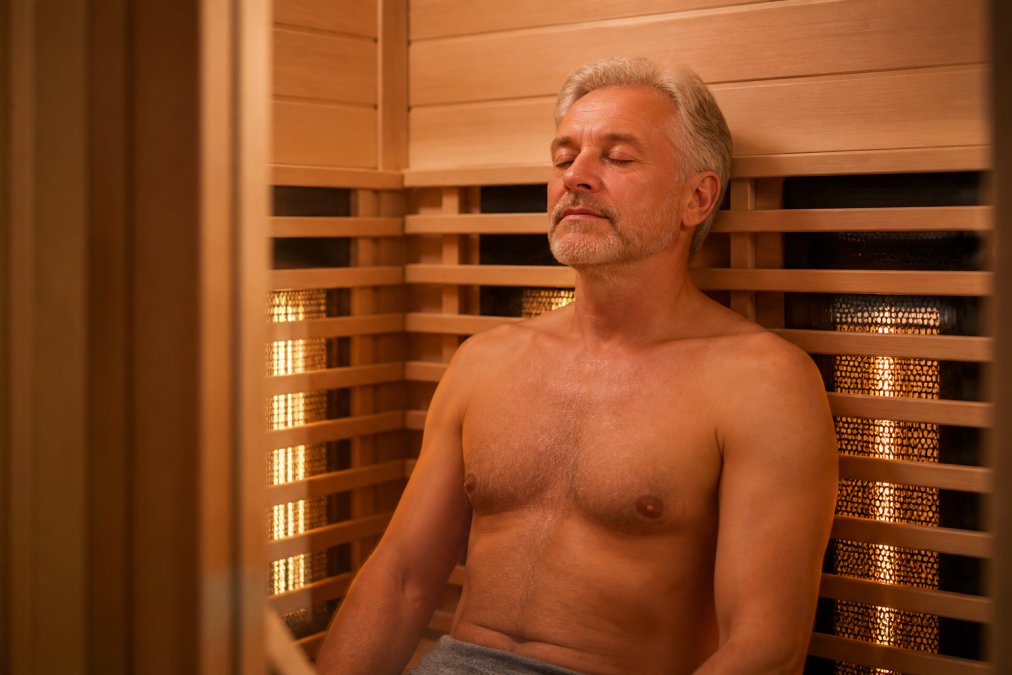
Follow this sequence for every session:
- Hydrate before entering. Drink at least 16 ounces of water 30 minutes before your session.
- Set the temperature for your condition. For chronic pain management, start at 110-120°F (43-49°C) for the first two weeks. Increase by 5°F increments only after your body has acclimatized.
- Enter and settle for 5 minutes. Do not stretch or move aggressively in the first five minutes.
- Perform gentle range-of-motion movements at the midpoint. At the 10-12 minute mark of a 20-minute session, slowly rotate affected joints through their comfortable range.
- Exit before discomfort. Neuropathic pain, dizziness, or nausea are signals to exit immediately.
- Cool down gradually. Avoid cold showers immediately after for joint pain patients. A five-minute room-temperature cool-down protects the circulatory system.
- Rehydrate after your session. Drink water after sauna use. After prolonged or particularly sweaty sessions, an electrolyte-containing beverage may also be appropriate.
-
Starting a Sauna Routine Safely
If you're new to sauna use, begin conservatively. Follow the temperature and operating recommendations provided by the sauna manufacturer, start with shorter sessions, and gradually increase your time only if you remain comfortable.
Stay hydrated, listen to your body, and leave the sauna immediately if you experience dizziness, nausea, unusual weakness, headache, chest discomfort, or other concerning symptoms. People with medical conditions or those taking medications that affect circulation, blood pressure, or hydration should consult a healthcare professional before beginning regular sauna use.
Sauna Session Duration for Pain Relief
The optimal sauna session duration for pain relief falls between 15 and 30 minutes for most adults with joint conditions. Shorter sessions of 10-15 minutes are appropriate during the acclimatization phase or on high-pain days. Sessions beyond 30 minutes offer diminishing therapeutic returns while meaningfully increasing dehydration risk and cardiovascular load.
Consistency over intensity is the principle that drives long-term mobility improvement.
Sauna Safety Precautions for Chronic Pain
Core precautions every chronic pain patient should follow:
- Never use a sauna when feverish.
- Avoid alcohol before or immediately after sessions.
- Do not use a sauna immediately after intense exercise. Wait at least 30 minutes.
- Keep a water bottle inside the sauna and sip throughout the session.
- Use the buddy system or keep a phone accessible if you are new to sauna use.
As noted in American Heart Association guidance on heat and cardiovascular health, people with heart conditions should consult their physician before beginning any regular heat therapy practice.
Contraindications and When to Avoid Sauna Use
Avoid sauna use entirely if you have:
- Uncontrolled hypertension or recent cardiovascular events
- Active joint flares with significant swelling or heat in the joint itself
- Severe kidney disease or impaired fluid regulation
- Pregnancy
- Multiple sclerosis or other conditions involving heat sensitivity
People taking medications that affect blood pressure, heart rate, or fluid balance should consult their physician before starting a sauna routine.
After Your Sauna Session
Allow your body to cool gradually after leaving the sauna and replenish fluids lost through sweating. Gentle stretching may feel particularly comfortable while your muscles are still warm, but movements should remain within a comfortable range and should never cause pain.
If you use sauna bathing as part of a broader mobility or recovery routine, consider discussing the timing of heat and stretching with your physical therapist or healthcare provider.

The stretch window after sauna use is genuinely underused.
Integrating Sauna Use with Physical Therapy
Sauna use and physical therapy are more complementary than most people realize. Physical therapists frequently prescribe heat before manual therapy or therapeutic exercise to improve tissue extensibility. A home infrared sauna session can serve exactly this function when scheduled 30-60 minutes before a PT session.

Heat is sometimes used in rehabilitation settings to promote relaxation and prepare muscles for movement. If you're currently working with a physical therapist for joint pain, arthritis, an injury, or mobility limitations, ask whether sauna use could complement your individual treatment plan.
Your physical therapist can help determine whether heat is appropriate for your condition and when it makes the most sense relative to stretching, mobility work, or therapy sessions.
For adults building a home wellness space, RejuvaZone's infrared sauna range is designed specifically for this kind of consistent, therapeutic use. The 2-person infrared sauna with low EMF carbon panels and hemlock wood construction operates at documented low EMF levels with precise temperature controls. For households where multiple family members want to use the sauna, the 4-person cedar infrared sauna with near-zero EMF technology offers more space without sacrificing therapeutic performance.

According to Mayo Clinic's overview of complementary pain management approaches, combining passive heat therapies with active physical rehabilitation produces better long-term outcomes than either approach used in isolation.
Protocol Stage |
Timing |
Duration |
Key Action |
|---|---|---|---|
Pre-session hydration |
30 min before |
5 min |
16 oz water |
Acclimatization phase |
Weeks 1-2 |
10-15 min |
110-120°F, passive heat |
Active mobility window |
Mid-session |
5-10 min |
Gentle joint rotation |
Post-session stretching |
15-25 min after |
10 min |
Targeted joint mobility work |
Electrolyte replenishment |
0-15 min after |
Ongoing |
Water with electrolytes |
PT integration |
30-60 min before PT |
15-20 min |
Heat priming for therapy |
Chronic joint pain rarely responds to a single intervention. The adults who see meaningful, lasting improvement are those who build consistent routines that combine heat therapy, targeted mobility work, and professional physical therapy into a coherent system. RejuvaZone's infrared saunas are built for exactly this kind of daily use, with documented low EMF ratings, premium hemlock and cedar construction, and precise temperature controls that support the protocols in this guide. If you're ready to build a home recovery space that actually works for your joints, shop the RejuvaZone infrared sauna collection and find the right fit for your space and goals.
Frequently Asked Questions
Is a sauna good for aching joints?
Yes, sauna bathing can help with aching joints by increasing blood flow, reducing joint stiffness, and lowering pain intensity. The heat exposure promotes vasodilation, which brings more oxygen and nutrients to inflamed tissues. Infrared therapy, in particular, penetrates deeper into soft tissue than surface heat, making it a popular choice for chronic pain management. Most people notice reduced stiffness and improved range of motion after consistent sessions, though results vary by condition and individual response.
What type of sauna is best for arthritis pain?
Far infrared saunas are widely favored for arthritis pain because they operate at lower temperatures (around 120–140°F) while still delivering therapeutic heat deep into joints and soft tissue. This makes sessions more tolerable for people with rheumatoid arthritis or ankylosing spondylitis who may find the intense heat of a traditional sauna uncomfortable. Low EMF infrared saunas, like those available from RejuvaZone, offer a safe at-home option with documented emissions levels for added peace of mind.
How often should you use a sauna for chronic pain?
For chronic pain management, 3–4 sessions per week is a reasonable starting point, with each session lasting 15–20 minutes. As your body acclimatizes to heat stress, you can gradually extend sessions to 30 minutes. Daily use is practiced by some, but rest days allow tissue healing and help prevent dehydration. Always consult your physician before establishing a routine, especially if you have inflammatory conditions such as rheumatoid arthritis or cardiovascular concerns.
Are there contraindications for sauna use with joint inflammation?
Yes. People with acute joint inflammation, uncontrolled high blood pressure, heart conditions, or active infections should avoid sauna use until cleared by a doctor. Pregnant individuals and those on medications that affect cardiovascular response or thermoregulation should also seek medical advice first. Dehydration risk rises with heat exposure, so electrolyte replenishment before and after sessions is essential. If joint pain worsens during or after a session, stop immediately and consult a healthcare provider.