Why Infrared Heat Works on Cells
Table of Contents
- How Infrared Heat Penetrates Cells
- Cellular Energy: Mitochondrial Function and ATP Synthesis
- Infrared Sauna Benefits for Recovery and Cellular Health
- How Long to Stay in an Infrared Sauna
- Thermal vs. Non-Thermal Effects of Infrared
- Bringing Infrared Wellness Home
- Frequently Asked Questions
Last Updated: September 26, 2026
How Infrared Heat Penetrates Cells
Infrared heat works on cells through a fascinating interplay of wavelength, tissue penetration, and molecular interaction. Infrared radiation interacts with the body differently depending on wavelength, intensity, exposure conditions, and the type of device being used. Research has explored both thermal and non-thermal effects, but consumer sauna experiences should not be presented as guaranteed cellular outcomes. Understanding why infrared heat works on cells requires knowing how different wavelengths behave and what happens when that energy reaches your mitochondria.
The key lies in how infrared wavelengths interact with water molecules and cellular structures. Unlike visible light, which your eyes can detect, infrared radiation operates in the invisible spectrum beyond red light. This energy doesn't get absorbed and scattered as readily as visible light, allowing it to penetrate deeper into dermal and subcutaneous layers. The penetration depth varies depending on the wavelength, a critical distinction that shapes how effectively infrared therapies work.
Wavelength and Tissue Penetration
Different infrared wavelengths penetrate tissue to different depths, which determines their biological effect. Near-infrared light (700-1,100 nanometers) penetrates most superficially, reaching primarily the epidermis and upper dermis. Far infrared radiation travels deeper, reaching subcutaneous tissue.
This penetration difference matters because cells at different depths respond to different stimuli. Superficial tissues benefit from near-infrared's direct cellular activation, while deeper tissues respond to the thermal effects of far infrared. The infrared sauna benefits for recovery use this depth advantage, far infrared's ability to warm internal tissues without excessive surface heat creates a more tolerable, sustained thermal environment for prolonged sessions.

Far Infrared vs Near Infrared Differences
Far infrared and near infrared represent distinct parts of the infrared spectrum, each with different mechanisms of action. Near infrared penetrates less deeply but delivers higher photon energy, directly stimulating chromophores like cytochrome c oxidase in mitochondria. This direct cellular stimulation occurs with less thermal contribution.
Far infrared operates primarily through thermal mechanisms. It heats tissue more gradually and uniformly, triggering physiological responses to elevated core temperature. When you use an infrared sauna, far infrared dominates the heat delivery, creating the sustained warmth that triggers vasodilation, sweat gland stimulation, and metabolic acceleration. The distinction matters for how long to stay in an infrared sauna, as far infrared's gentler thermal profile may allow for longer sessions than near infrared devices.
Cellular Energy: Mitochondrial Function and ATP Synthesis
The real power of infrared heat emerges at the mitochondrial level. Your mitochondria are the cellular powerhouses, responsible for generating ATP (adenosine triphosphate), the energy currency your cells use for every function. Infrared radiation stimulates the electron transport chain within mitochondria, particularly through interaction with cytochrome c oxidase, an enzyme critical to ATP production.
Photobiomodulation research has examined how certain wavelengths of light may interact with mitochondrial and cellular processes. However, findings from laboratory and clinical research should not automatically be treated as expected results from a consumer infrared sauna, because wavelength, dose, device design, and exposure conditions can differ substantially.
The mitochondrial stimulation also triggers intracellular signaling cascades. Increased ATP availability may activate pathways involved in cellular repair, protein synthesis, and stress response. Heat shock proteins, molecular chaperones that protect and repair damaged proteins, are upregulated in response to infrared-induced cellular stress. This adaptation response may support cellular regeneration and recovery.
Infrared Sauna Benefits for Recovery and Cellular Health
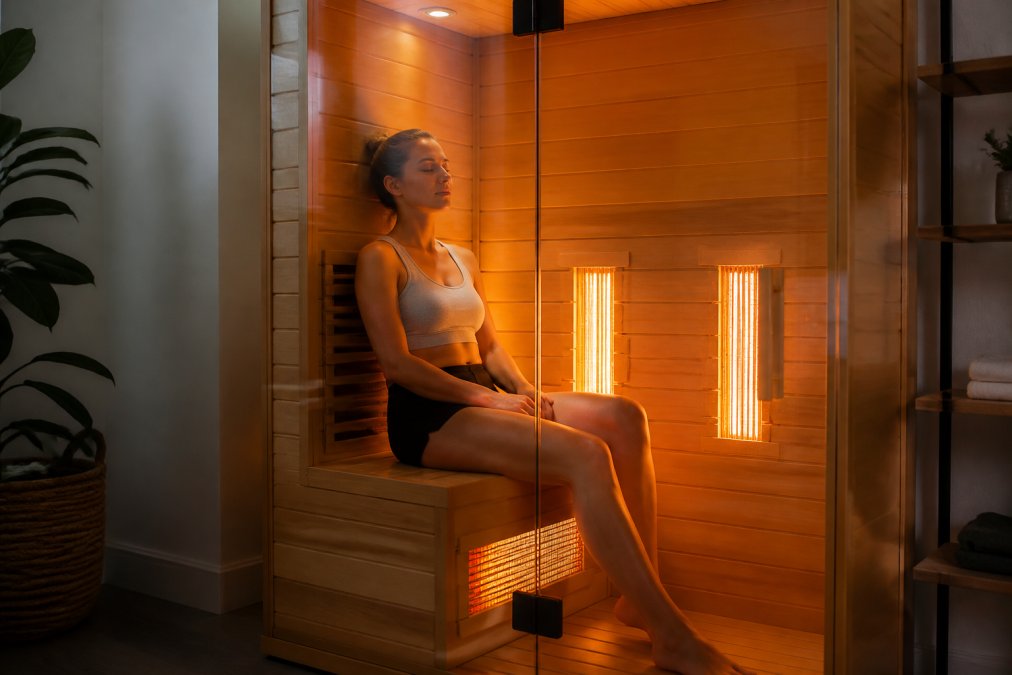
The infrared sauna benefits for recovery stem directly from these cellular mechanisms. When you sit in an infrared sauna, far infrared radiation penetrates your tissues, warming internal structures and triggering a cascade of physiological adaptations. Heat exposure has been studied for a range of physiological responses, including heat-shock and circulatory effects. Individual responses vary, and these research findings should not be presented as guaranteed whole-body repair or cellular benefits from a home sauna.
Beyond energy production, infrared heat may influence multiple recovery pathways. The thermal stimulus may trigger metabolic rate elevation, increase oxygen consumption, and promote the mobilization of metabolic waste products. For athletes and active individuals, this may contribute to muscle recovery, reduced soreness, and improved flexibility. The wellness-focused approach emphasizes the comfort and relaxation benefits alongside these physiological responses.
Vasodilation and Blood Circulation
One of the most immediate effects of infrared heat is vasodilation, the widening of blood vessels. As core body temperature rises, your cardiovascular system responds by dilating capillaries and arteries to increase blood flow to the skin and periphery. This vasodilation improves oxygen-rich blood delivery to tissues, supporting nutrient transport and metabolic waste removal.
Heat exposure can temporarily affect circulation and how the body responds to warmth. Many people use saunas for relaxation, comfort, and post-activity wellness, but specific claims about oxygen delivery, metabolic waste removal, lymphatic effects, soreness, mobility, or joint stiffness should be supported by appropriate evidence rather than assumed from the heating mechanism alone.
Infrared Sauna Designed for Home →
Heat Shock Proteins and Cellular Repair
Heat shock proteins (HSPs) are molecular responders to thermal stress. When your body temperature rises during infrared sauna exposure, cells upregulate HSP production as an adaptive response. These proteins function as cellular repair specialists, they refold misfolded proteins, prevent protein aggregation, and facilitate the removal of damaged cellular components.
The heat shock response is fundamentally protective. By increasing HSP expression, infrared heat may trigger a cellular maintenance program that extends beyond the sauna session itself. Regular infrared exposure may condition your cells to activate repair pathways more readily, potentially creating a cumulative benefit over time. This adaptation may be distinct from acute comfort benefits; it may represent a physiological training effect that builds cellular resilience.
How Long to Stay in an Infrared Sauna
Optimal infrared sauna session duration varies significantly based on individual factors, sauna type, and personal tolerance. Rather than following generic time recommendations, the most reliable approach is to consult your specific sauna manufacturer's guidance, as session length and frequency are typically calibrated to your equipment's heat delivery characteristics, surface temperature, and design.
Manufacturer recommendations typically account for the infrared wavelength your sauna uses. Far infrared saunas, which operate through primarily thermal mechanisms, may generally permit longer comfortable sessions than near-infrared devices because far infrared heats tissue more gradually. Near-infrared saunas deliver higher photon energy and can create more intense acute sensations, which may limit comfortable session duration for some users. Your sauna's documentation will specify appropriate starting durations and how to progress safely.
Individual tolerance depends on several factors: baseline heat tolerance, cardiovascular fitness, age, medications, and any existing health conditions. Someone new to infrared sauna use should start conservatively and allow their body to acclimate before extending session length. Conversely, regular users often find they can comfortably extend sessions as their heat tolerance builds over weeks of consistent use.
Follow your manufacturer's specific recommendations for session length and frequency. These guidelines are based on your equipment's engineering and safety testing. If your sauna documentation does not specify session duration, contact the manufacturer directly rather than relying on generic wellness advice. Individual results and comfort vary widely, and what works for one person may not suit another. Always prioritize your personal comfort and stop a session if you experience dizziness, excessive fatigue, or any concerning symptoms.
Thermal vs. Non-Thermal Effects of Infrared
Infrared's effects on cells split into two categories: thermal and non-thermal. Thermal effects result from the heat itself, the rise in tissue temperature that triggers vasodilation, sweat gland activation, and metabolic acceleration. Non-thermal effects involve direct photon interaction with cellular molecules, independent of temperature increase.
Near-infrared radiation produces stronger non-thermal effects because its shorter wavelengths carry higher photon energy capable of directly stimulating mitochondrial enzymes. Far infrared operates primarily through thermal mechanisms, warming tissue and triggering temperature-dependent physiological responses. Both mechanisms support cellular health, but through different pathways. Understanding this distinction helps explain why different infrared wavelengths feel different and why the infrared sauna benefits for recovery emphasize the thermal experience, the sustained, gentle heat that penetrates deeply and triggers whole-body adaptation.
Bringing Infrared Wellness Home
Creating an infrared wellness space at home transforms how you approach daily recovery and relaxation. RejuvaZone specializes in premium infrared saunas designed for home use, offering models that fit various spaces and budgets. The 2-person infrared sauna with low EMF carbon panels delivers far infrared heat through 6 low EMF carbon crystal heating panels, allowing you to build a consistent daily recovery ritual without facility commutes.
For those seeking deeper capacity and premium construction, the 4-person cedar sauna with near-zero EMF technology uses PureTech near-zero EMF heat emitters and Canadian red cedar construction.

Frequently Asked Questions
How does infrared heat actually penetrate skin and reach cells?
Infrared radiation, part of the electromagnetic spectrum, passes through the epidermis and penetrates deeper tissue layers. Far infrared wavelengths (typically 4–14 micrometers) are absorbed by water molecules and organic compounds within cells. This absorption causes vibrational and rotational energy in molecules, generating heat that spreads throughout tissue. Unlike surface heating, infrared heat works at the cellular level, stimulating mitochondrial activity and intracellular signaling pathways. The depth of penetration depends on wavelength; longer wavelengths penetrate deeper than shorter ones.
What is the difference between far infrared and near infrared for cellular effects?
Far infrared (4–14 micrometers) penetrates deeper into tissue and is primarily thermal, warming cells and triggering heat shock proteins and vasodilation. Near infrared (0.7–1.5 micrometers) penetrates less deeply but can reach mitochondria directly, stimulating cytochrome c oxidase in the electron transport chain and promoting ATP synthesis through photobiomodulation. Far infrared creates whole-body warmth and encourages blood circulation, while near infrared works more directly on cellular energy production. Both trigger beneficial intracellular signaling, but through different mechanisms.
How long should I use an infrared sauna to see wellness benefits?
Recommended session length and frequency vary by sauna model, manufacturer, and individual. Follow the specific guidance provided for your sauna rather than relying on a general time or frequency recommendation. If you have health concerns or questions about regular sauna use, consult an appropriate healthcare professional.
What makes infrared heat different from traditional convection heating?
Infrared heat radiates directly as electromagnetic energy, warming objects and tissue without first heating the surrounding air. Convection heating warms air, which then transfers heat to your body indirectly. Infrared penetrates tissue, stimulating molecular resonance and cellular activity at depth. Convection primarily heats the skin surface. This difference means infrared saunas operate at lower air temperatures (typically 110–130°F) than traditional saunas (160–200°F) while still delivering deep tissue warmth. Infrared's direct cellular stimulation—triggering ATP synthesis, vasodilation, and heat shock proteins—may be a key advantage for wellness-focused users.