Why Premium Saunas Cost More: 2026 Cost Breakdown
Table of Contents
- What Separates Premium Saunas From Budget Models
- Sauna Wood Types and Durability: Why Cedar and Hemlock Cost More
- Heater Technology: Carbon Fiber Panels and Full-Spectrum Elements
- Home Sauna Energy Efficiency: Wattage, Voltage, and Operating Cost
- Low EMF Shielding and Air Quality: The Costs Budget Saunas Skip
- Prefab Kits vs Custom Installation: Site Prep and Hidden Costs
- Total Cost of Ownership: What Cheap Saunas Really Cost Over Time
- Frequently Asked Questions
Last Updated: September 13, 2026
What Separates Premium Saunas From Budget Models
Premium saunas often cost more because they may use higher-grade materials, more advanced heating systems, added comfort features, stronger warranties, or more detailed engineering and testing. The exact differences vary by brand and model. This guide from RejuvaZone breaks down where that spending lands, from kiln-dried cedar to low EMF shielding.

The short answer: Budget and premium saunas can differ significantly in materials, heating technology, construction quality, warranty coverage, features, and long-term support. Price alone does not guarantee quality, so buyers should compare the specifications of individual models.
Below are the cost drivers that separate the two tiers, and which ones you can verify before you buy.
U.S. Consumer Product Safety Commission electrical safety guidance
Sauna Wood Types and Durability: Why Cedar and Hemlock Cost More
Cedar and hemlock are commonly used in higher-priced sauna construction because of their appearance, dimensional characteristics, and suitability for warm, humid environments. Performance still depends on wood quality, drying, construction methods, and overall design. A sauna is a wet, hot, repeatedly expanding box, and the wood has to tolerate that without twisting or cracking.
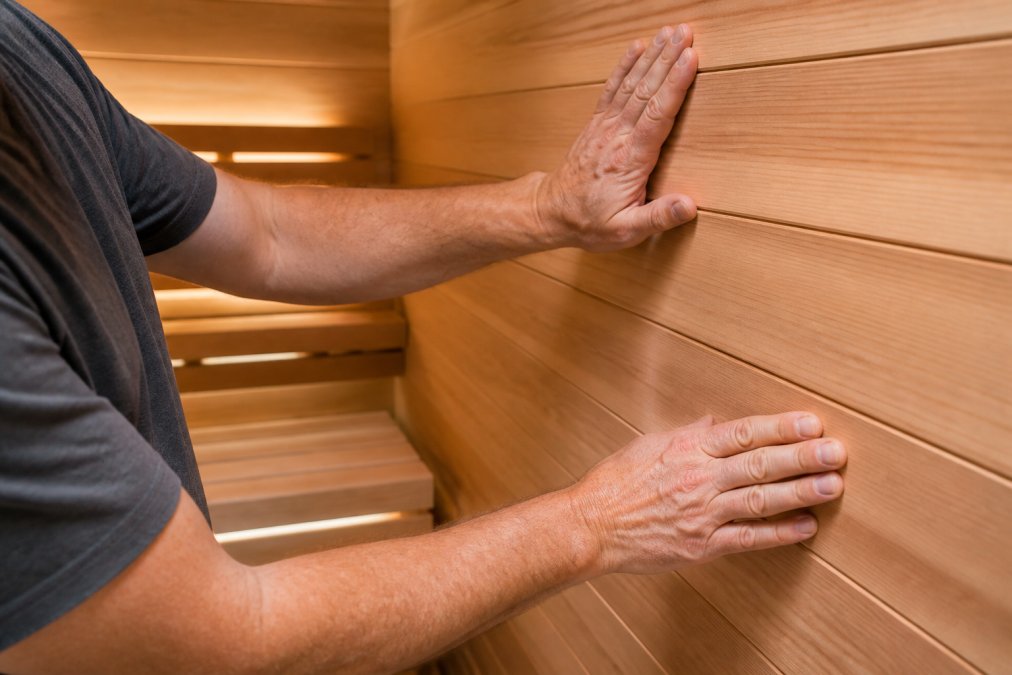
Cedar carries natural oils that help it shrug off humidity. Hemlock is denser and more dimensionally stable, holding its shape through years of heat cycles. Eucalyptus appears in some builds, though it varies by supplier.
Wood |
Moisture Resistance |
Stability Under Heat |
Typical Use |
|---|---|---|---|
Cedar |
High, natural oils |
Good |
Premium cabins, benches |
Hemlock |
Moderate |
Excellent |
Premium cabins, structural |
Eucalyptus |
Moderate |
Varies by species |
Mid-tier builds |
Pine / softwood |
Varies by species and treatment |
Varies |
Used across a range of sauna designs |
Kiln-Dried Wood, Tongue-and-Groove Joinery, and Heat Retention
Kiln-dried wood is lumber heated in a controlled kiln to drive moisture content down before milling. Properly dried lumber can help reduce dimensional movement after installation, although performance also depends on species, construction, humidity, and installation quality.
Tongue-and-groove construction can help create a tight, finished enclosure, but overall heat retention depends on wall construction, insulation, seals, ventilation, cabin size, and heater design. Compare the complete construction specifications rather than assuming one joint style determines energy use.
Heater Technology: Carbon Fiber Panels and Full-Spectrum Elements
Infrared saunas may use carbon panels, ceramic elements, full-spectrum heaters, or other heating technologies. These systems differ in design, heat distribution, operating characteristics, and cost. Carbon panels produce a broader, gentler infrared spectrum and tend to run cooler at the panel surface.
Full-spectrum elements add near, mid, and far infrared wavelengths in one unit, more engineering per heater, and part of why premium saunas cost more than a single-wavelength budget box.
Here's what most guides miss: the heater is only half the system. Control systems, wiring, thermal protection, certifications, and safety features are important specifications to compare across sauna models. Buyers should review the manufacturer’s electrical and safety documentation rather than assuming safety quality based only on price.
Home Sauna Energy Efficiency: Wattage, Voltage, and Operating Cost
Home sauna energy efficiency comes down to insulation quality, heater type, and how hard the unit works to hold temperature. Energy use depends on factors such as cabin size, insulation, seals, heater efficiency, thermostat behavior, session duration, ambient conditions, and the specific sauna design.
Wattage tells you the draw, not the cost. Wattage alone does not determine operating cost. Actual electricity use depends on how long the heater runs, how the sauna is constructed, the selected temperature, and local electricity rates.
Voltage requirements matter before you buy, not after. Many larger electric heaters need a dedicated circuit and a specific voltage supply, and running one on an undersized circuit is a code and safety problem. Confirm your panel capacity with a licensed electrician before delivery.
Low EMF Shielding and Air Quality: The Costs Budget Saunas Skip
Some sauna manufacturers market low-EMF or near-zero-EMF designs as a premium feature. If EMF specifications matter to you, compare the manufacturer’s published measurements, testing method, and measurement distance. Reducing electromagnetic field exposure at the seat is a design problem, not a part you bolt on at the end.

EMF performance can be influenced by heater design, wiring layout, grounding, electrical components, and measurement conditions. Because these details vary by manufacturer, the most useful comparison is documented test data rather than assumptions about internal construction.
What 'Low EMF' Actually Means on a Spec Sheet
EMF is measured in milligauss (mG) for magnetic fields and volts per meter (V/m) for electric fields. A meaningful claim states the measurement, the distance at which it was taken, and the instrument used. A number without a distance is not a specification.
When you compare listings, look for three things:
- A stated field strength at a stated distance (for example, at the typical seated position rather than at the heater surface)
- Whether the measurement covers both electric and magnetic fields, since they behave differently
- Whether the manufacturer publishes the figure at all, because silence is itself information
If a listing uses terms such as “low EMF” or “near-zero EMF,” look for published measurement data, the test distance, and any available explanation of the testing method. If those details are not provided, contact the manufacturer or seller for clarification. The World Health Organization's electromagnetic fields overview is a reasonable starting point for understanding why buyers ask the question, though it addresses general public exposure rather than sauna-specific measurements.
Off-Gassing, VOC Emissions, and Material Sourcing
Off-gassing is the release of volatile organic compounds from adhesives, finishes, and composite materials. A sauna heats its own materials, and heat accelerates that release, which is why material sourcing matters more here than in ordinary furniture.
Sauna materials can include solid wood, engineered wood, adhesives, finishes, insulation, plastics, and other components. Buyers concerned about VOCs or material emissions should review the manufacturer’s material specifications, certifications, and any available emissions information for the specific model.
Ventilation is the second half of the equation. A low intake near the heater and a high exhaust vent create a convection path that carries warmed air and released compounds out of the cabin. Ventilation design varies widely by sauna type and manufacturer. Compare the ventilation system and installation requirements of the specific models you are considering.
Ventilation helps either way, but it does not fix a material problem. A well-vented cabin full of high-adhesive composites still releases more than a solid-wood cabin with modest venting. The two factors compound, which is why premium builders spend on both.
Prefab Kits vs Custom Installation: Site Prep and Hidden Costs
Prefab kits cost less upfront and arrive as modular panels you assemble on site. Custom installations cost more because a builder frames, wires, and finishes the room around your space.
The hidden costs sit in site prep. Level flooring, dedicated electrical, ventilation routing, and door clearance all add labor. A kit that "fits" on paper can still need a contractor once the electrician sees your panel.
Factor |
Prefab Kit |
Custom Build |
|---|---|---|
Upfront cost |
Lower |
Higher |
Site prep |
Varies |
Varies, often more involved |
Electrical work |
Varies by model and site |
Often required; depends on design |
Lead time |
Shorter |
Longer |
Fit to odd spaces |
Limited |
Flexible |
Total Cost of Ownership: What Cheap Saunas Really Cost Over Time
Total cost of ownership is the purchase price plus electrical work, energy use, repairs, and replacement over the years you own the unit. Most sauna articles stop at the sticker price; the number that actually separates the tiers is the ten-year figure.
Here is how to build that model yourself, category by category.
1. Purchase Price
The visible number. Premium units cost more here, and that is the entire point of the comparison. Everything below is what closes the gap.
2. Electrical and Site Prep
This is the most commonly underestimated line. A larger electric heater typically needs a dedicated circuit sized to its voltage and amperage, which may mean a new breaker, wiring, permit, and electrician's labor. Confirm the unit's electrical requirements with a licensed electrician before delivery, and get the quote in writing.
3. Annual Energy Draw
Energy cost is not wattage times hours. It is wattage times the fraction of time the heater actually runs to hold temperature, multiplied by your local rate. A tight, well-insulated cabin may cycle less than a leaky one, so the higher-wattage unit can cost less to run. To estimate:
- Find the heater's rated wattage on the spec sheet
- Estimate duty cycle (the share of time it is actively heating) from insulation quality and cabin volume
- Multiply by your utility's rate per kilowatt-hour, which is printed on your bill
Run the same estimate for both a premium and a budget unit. The gap in duty cycle is usually the largest single number in the model.
4. Repairs and Replacement Parts
Replacement-parts availability varies by manufacturer. Before buying, check whether heaters, controls, sensors, and other major components are replaceable and whether the manufacturer or seller provides long-term parts support.
5. Service Life
This is where the model turns. Service life can vary substantially based on materials, construction quality, installation, maintenance, environment, and parts availability. When comparing models, consider warranty terms and the manufacturer’s track record rather than assuming lifespan from price alone. Divide total cost by expected years of use and the per-year figure often favors the premium unit.
6. Warranty and Support
Warranty length and coverage shift risk off you and onto the manufacturer. A longer structural and heater warranty is effectively insurance bundled into the purchase price. Read what is covered, how long, and who pays shipping on a replacement part, because those terms vary widely.
7. End of Life
Disposal or resale is the last line. Resale and disposal value vary by brand, condition, local demand, size, and ease of disassembly or relocation.
Running the Model
Build a simple table with two columns, budget unit and premium unit, and the seven categories above as rows. Fill in what you know, use conservative estimates where you do not, and total each column across a ten-year horizon. The result will vary by model. A higher-priced sauna may offer stronger materials, features, warranty coverage, or serviceability, but a lower-priced model may still provide better value depending on your usage, installation costs, electricity rates, and priorities.
Use this worksheet to gather the inputs before you commit:
- Purchase price for each unit you are considering
- Electrician quote, including any new circuit or permit
- Heater wattage and estimated duty cycle for each unit
- Your utility rate per kilowatt-hour
- Replacement parts availability and warranty length
- Expected service life in years
- Resale or disposal cost at end of life
Add those up across a ten-year horizon and the gap between tiers narrows considerably. Premium saunas cost more upfront, but whether they cost less per year of use depends on the specific products being compared and the assumptions used in your calculation.
Frequently Asked Questions
What materials distinguish premium saunas from budget models?
The biggest differences are the wood and the heater. Premium saunas typically use kiln-dried Canadian cedar or hemlock, which resist warping and hold heat well, while budget kits often use lower-grade softwoods. Premium models also use carbon fiber or full-spectrum heaters, thicker thermal insulation, and low EMF wiring. Those choices raise the build cost, but they affect how the sauna performs and how long it lasts.
Does a sauna make your electric bill go up?
It can, but how much depends on the heater wattage, how well the cabin is insulated, and how often you use it. A well-insulated premium sauna retains heat better, so the heater cycles less to hold temperature. Wattage, voltage requirements, and your local electricity rate all factor in. Check the manufacturer's specifications for your specific model to estimate running costs.
Are there hidden costs associated with cheaper sauna kits?
Often, yes. Lower-priced kits may need a dedicated circuit added by an electrician, extra site prep, or replacement parts sooner because of warping or failing heaters. Some buyers also pay for upgraded insulation or ventilation after the fact. Those add-ons can narrow the gap between a cheap kit and a premium sauna, which is why total cost of ownership matters more than the sticker price alone.
Do premium saunas offer better home sauna energy efficiency than entry-level options?
They often do. Premium saunas tend to use thicker thermal insulation, tighter tongue-and-groove construction, and heaters matched to the cabin size, all of which reduce heat loss. That means the heater runs less to maintain temperature. Entry-level models with thin walls and oversized heaters can use more electricity to reach and hold the same heat.