Massage Chair vs Professional Therapy: True Cost
Table of Contents
- Initial Investment: Massage Chair vs Professional Therapy Sessions
- Massage Chair Return on Investment Over Time
- Professional Massage Therapy Session Frequency and Costs
- Long-Term Maintenance and Longevity Considerations
- Convenience, Accessibility, and Lifestyle Impact
- Health Insurance, HSA, and FSA Eligibility
- Which Option Makes Financial Sense for You
- Frequently Asked Questions
Last Updated: September 21, 2026
Initial Investment: Massage Chair vs Professional Therapy Sessions
The upfront cost difference between a massage chair and professional therapy is stark. A quality massage chair from RejuvaZone ranges from $679 to $2,479, depending on features and technology. Professional massage therapy sessions typically cost between $60 and $150 per hour, with most therapists charging around $100 for a standard 60-minute session.
This initial gap matters, but it's only the first piece of the financial picture. A massage chair requires a one-time capital expenditure, while professional therapy involves recurring appointment fees. The real question isn't which costs more upfront, it's which delivers better long-term value.
Consider what you're actually purchasing. The M9 Zero Gravity Massage Chair uses 3D roller technology and AI personalization to adjust the massage based on your body shape. It delivers a consistent experience every time you use it. Professional therapists offer human expertise and customization, but you're paying for their time, their facility overhead, and their travel availability.

Many people overlook the hidden costs embedded in professional therapy: travel time to appointments, parking or transportation fees, and the opportunity cost of scheduling around a therapist's availability. If you're paying $100 for a session but spending 30 minutes driving there and back, you're really investing 90 minutes of your day plus fuel or parking costs.
Massage Chair Return on Investment Over Time
The massage chair return on investment calculation reveals why so many people choose at-home solutions. Break down the math: a $2,479 massage chair divided by the cost-per-session of professional massage ($100) equals roughly 25 sessions before the chair pays for itself purely on price.
Most people use a massage chair multiple times per week. If you use a massage chair frequently, the cost per use can decline substantially over time. How quickly it compares financially with professional massage depends on the chair price, how often you use it, local massage rates, maintenance, and how you value the differences between automated and professional massage.
Over five years, the financial picture becomes even clearer. Professional massage at $100 per session, twice monthly, costs $12,000. A $2,479 massage chair requires minimal maintenance and delivers unlimited sessions. Under those assumptions, the massage chair could cost substantially less over time than purchasing frequent professional massage sessions.
This calculation assumes you actually use the chair consistently. That's the real variable. A massage chair sitting unused in a basement delivers zero return. Professional therapy forces accountability through scheduled appointments and payment obligations. Home equipment requires self-discipline.
The massage chair return on investment also depends on features. The M9 includes AI personalization and zero gravity recline, which enhance the experience and encourage regular use. A $679 entry-level chair might have fewer features, but it still eliminates the per-session cost once purchased.

Professional Massage Therapy Session Frequency and Costs
How often do people actually get professional massage therapy? Usage patterns vary dramatically based on lifestyle, income, and health priorities. Some people schedule weekly sessions for chronic pain management. Others book monthly appointments for relaxation and stress relief. Many people get massage sporadically, only when they're dealing with acute soreness or injury.
Professional massage therapy session frequency is highly individual and depends on your specific goals. Professional massage frequency varies widely based on personal preference, goals, budget, provider recommendations, and any medical considerations. There is no universal schedule that applies to everyone.
The cost structure of professional therapy creates a natural ceiling on frequency. At $100 per session, weekly appointments cost $5,200 annually. That's a significant commitment for most households. Monthly sessions cost $1,200 yearly, more manageable but still a recurring expense. This financial reality means many people settle for less frequent professional massage than they might actually benefit from.
Professional therapists bring genuine value: they can assess your specific muscular issues, apply targeted techniques, and adapt their approach based on real-time feedback. They offer expertise that a machine cannot replicate. But that expertise comes with scheduling constraints, travel requirements, and the therapist's own business overhead.
The professional massage therapy session frequency question often resolves itself based on budget. People don't choose how often they want massage, they choose how often they can afford it. This is where at-home solutions shift the equation entirely. You can use a massage chair as often as you want without additional cost.
Long-Term Maintenance and Longevity Considerations
A massage chair is furniture. Like any piece of furniture, it requires basic maintenance and has a lifespan. The quality of construction, materials, and components determines how long it lasts and what maintenance it needs.
RejuvaZone massage chairs use durable PU leather upholstery and engineered frames designed for regular use. The mechanical components, rollers, motors, and electronic controls, are the parts most likely to require attention over time. Massage chair lifespan varies by model, build quality, usage, maintenance, environment, and parts availability. Review the manufacturer’s warranty, service information, and replacement-parts support when comparing models.
M9 Zero Gravity Massage Chair | AI Deep →
Maintenance requirements are minimal compared to professional therapy commitments. You'll want to keep the upholstery clean, avoid excessive heat exposure, and follow the manufacturer's guidelines for operation. Most issues that arise are covered under warranty during the first few years of ownership.
The real maintenance consideration is whether replacement parts remain available if something breaks. This is where RejuvaZone's support matters. If a control panel fails or upholstery tears after the warranty expires, you need replacement parts to be accessible. Some manufacturers discontinue support for older models, making repairs impossible.
Professional massage therapy has its own longevity consideration: therapist availability. What happens if your therapist retires, moves, or changes careers? You start the process of finding someone new, potentially losing continuity of care and familiar communication about your needs.
Convenience, Accessibility, and Lifestyle Impact
This is where massage chair vs professional massage therapy cost comparison becomes more than just numbers. Convenience has real value that pure financial analysis misses.
A massage chair in your home is available whenever you want it. Morning stiffness? Use it before breakfast. Sore after a workout? Sit down immediately. Evening stress? Recline for 20 minutes before bed. No scheduling required. No travel time. No waiting room. No rescheduling when something comes up.
Professional massage requires planning. You book an appointment days or weeks in advance, arrange your schedule around their availability, travel to their location, and commit to a specific time window. If you have back-to-back meetings or unexpected work demands, you either keep the appointment or cancel and reschedule.
This accessibility difference compounds over time. People with demanding schedules, caregiving responsibilities, or mobility limitations often struggle to maintain regular professional massage appointments. A massage chair removes those barriers entirely.
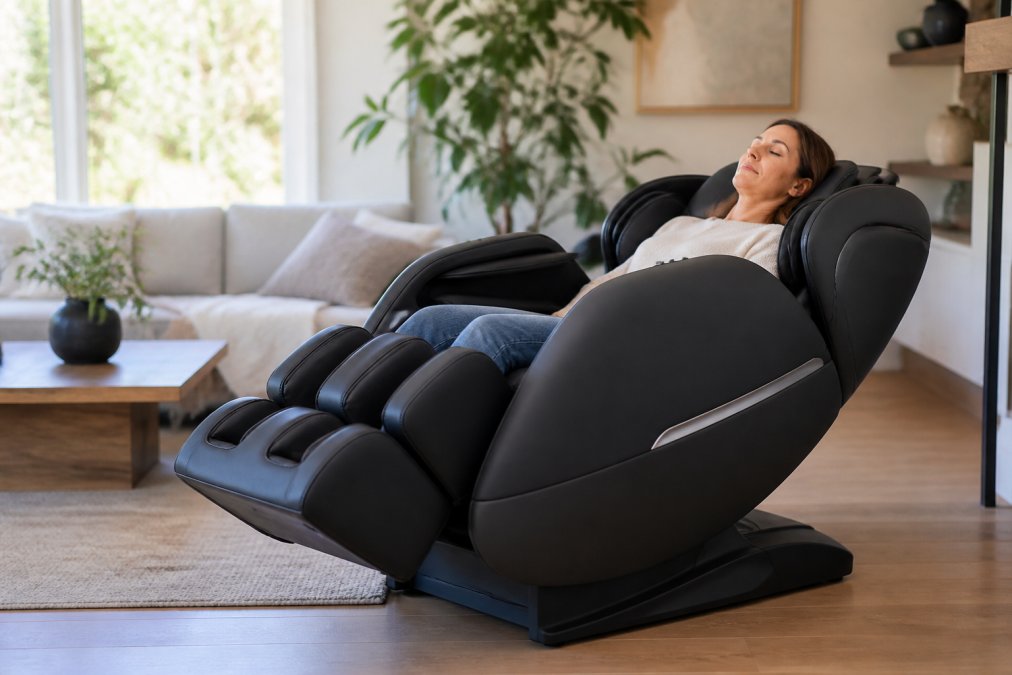
The lifestyle impact extends beyond pure convenience. Using a massage chair becomes part of a daily wellness routine. You're more likely to use it regularly because the friction to access is zero. Professional massage remains a special event, something you schedule and plan for rather than something you naturally integrate into daily life.
RejuvaZone customers report that at-home massage chairs encourage consistency. The zero gravity recline and heat therapy create a relaxation ritual that many people look forward to. That convenience may make it easier for some people to maintain a regular at-home relaxation routine.
Health Insurance, HSA, and FSA Eligibility
This is the financial angle most people miss entirely. Health insurance coverage and tax-advantaged account eligibility can dramatically change the real cost of both options.
Professional massage therapy may be covered by health insurance if it's prescribed by a physician for a specific medical condition. Coverage varies widely by plan and state. Some plans cover massage therapy as part of physical therapy or rehabilitation. Others don't cover it at all. You need to check your specific policy.
Health Savings Accounts (HSAs) and Flexible Spending Accounts (FSAs) are tax-advantaged accounts that allow you to set aside pre-tax money for qualified medical expenses.
Which Option Makes Financial Sense for You
The answer depends on your specific situation, not on universal rules.
Comparison Factor |
Massage Chair |
Professional Massage |
|---|---|---|
Initial Cost |
$679-$2,479 |
$0 (pay per session) |
Cost Per Session |
$0 (after purchase) |
$60-$150 |
Access |
Immediate, anytime |
Scheduled appointments |
Travel Time |
None |
15-60 minutes |
Consistency |
Unlimited use |
Limited by scheduling |
Expertise |
Automated programs |
Personalized assessment |
Annual Cost (2x/month) |
$0 (after purchase) |
~$1,200-$3,600 |
5-Year Total Cost |
$679-$2,479 |
~$6,000-$18,000 |
Frequently Asked Questions
How much does a high-quality massage chair cost compared to professional massage therapy?
Quality massage chairs range from $679 to $2,479 for premium models with advanced features like AI personalization and 3D roller technology. Professional massage therapy typically costs $60–$150 per session. The initial investment in a massage chair can pay for itself over time compared to ongoing professional sessions. The M9 Zero Gravity Massage Chair at $2,479, like other premium options, offers long-term value for regular users.
Does health insurance cover massage chairs or professional massage therapy?
Coverage varies by plan and state. Some insurance plans cover professional massage therapy when prescribed by a doctor for specific conditions, though many require high deductibles. RejuvaZone massage chairs are FSA and HSA eligible products. Check your plan details and consult your provider about coverage eligibility.
What is the typical professional massage therapy session frequency for ongoing wellness?
Wellness-focused individuals typically schedule professional massages monthly to quarterly, though some pursue weekly sessions for intensive recovery or therapeutic needs. Monthly sessions cost $720–$1,800 annually. At-home massage chairs allow daily or multiple-weekly use without recurring costs, making them cost-effective for people who want frequent access to massage benefits without appointment scheduling or travel time.
How long do massage chairs last, and what maintenance do they require?
Massage chair lifespan varies by model, usage, maintenance, build quality, and parts availability. Maintenance includes regular cleaning of upholstery, checking electrical connections, and following manufacturer guidelines for usage. Unlike professional therapy, which requires no maintenance on your end, chairs require space, occasional servicing, and eventual replacement. Refer to your specific chair's manufacturer documentation for detailed maintenance schedules and care instructions.