Can You Nap in a Zero Gravity Chair? A Practical Guide
Table of Contents
- Yes, You Can Nap in a Zero Gravity Chair
- How the Zero Gravity Position Supports Rest
- Sleeping in a Zero Gravity Chair: What You Should Know
- Setting Up Your Chair for a Comfortable Nap
- Can You Sleep Overnight in a Zero Gravity Chair?
- Disadvantages of Zero Gravity Chairs for Napping
- Best Chairs for Napping: What to Look For
- Conclusion
- Frequently Asked Questions
Last Updated: October 12, 2026
Yes, You Can Nap in a Zero Gravity Chair
A zero gravity chair nap is possible and can be comfortable for short rest periods. The reclined position feels naturally relaxing to many people, making it a practical option for brief daytime sleep.
The zero gravity position distributes body weight across the chair, reducing pressure on any single area. Many people find this more restful than sitting upright or lying flat on a bed.
Below, we cover how to set up a chair for napping, what to expect during sleep, and whether overnight use makes sense for you.
How the Zero Gravity Position Supports Rest
The zero gravity position elevates your legs slightly higher than your heart, which changes how blood flows through your body. It also reduces strain on your lower back: with proper support, your spine sits in a more neutral alignment, and the chair cradles your body instead of forcing it into one shape.
The headrest supports your neck and keeps your head from tilting forward or backward. Proper neck support matters because neck tension can keep you awake or cause discomfort when you try to rest.
Even weight distribution is what sets this apart. In a regular chair, pressure concentrates on your lower back and the back of your thighs; in a zero gravity chair, it spreads across your entire back and legs.
This doesn't mean the chair treats medical conditions. It simply means the position feels comfortable for many people who want to rest during the day.
Sleeping in a Zero Gravity Chair: What You Should Know
Napping in a zero gravity chair works well for short periods. Comfort beyond that varies from person to person.
Some factors affect how long you can comfortably rest:
- Your body size and shape, The chair's dimensions matter. You need enough width and depth to feel supported.
- The chair's padding and materials, Thicker cushioning generally feels more comfortable for longer rest.
- Room temperature, A cool room helps you sleep better than a warm one.
- Noise and light, A quiet, dim space makes napping easier.
- Your personal comfort preferences, Some people naturally prefer reclined positions; others do not.
The armrests and side support keep you from rolling or shifting during sleep, which may help you stay asleep longer than in a regular chair.
Your head position matters too. If the headrest is too high or too low, neck strain can wake you up. Adjust it so your head feels cradled, not tilted.
Setting Up Your Chair for a Comfortable Nap
The difference between a refreshing nap and a stiff one usually comes down to a few setup steps. Here is a practical sequence.
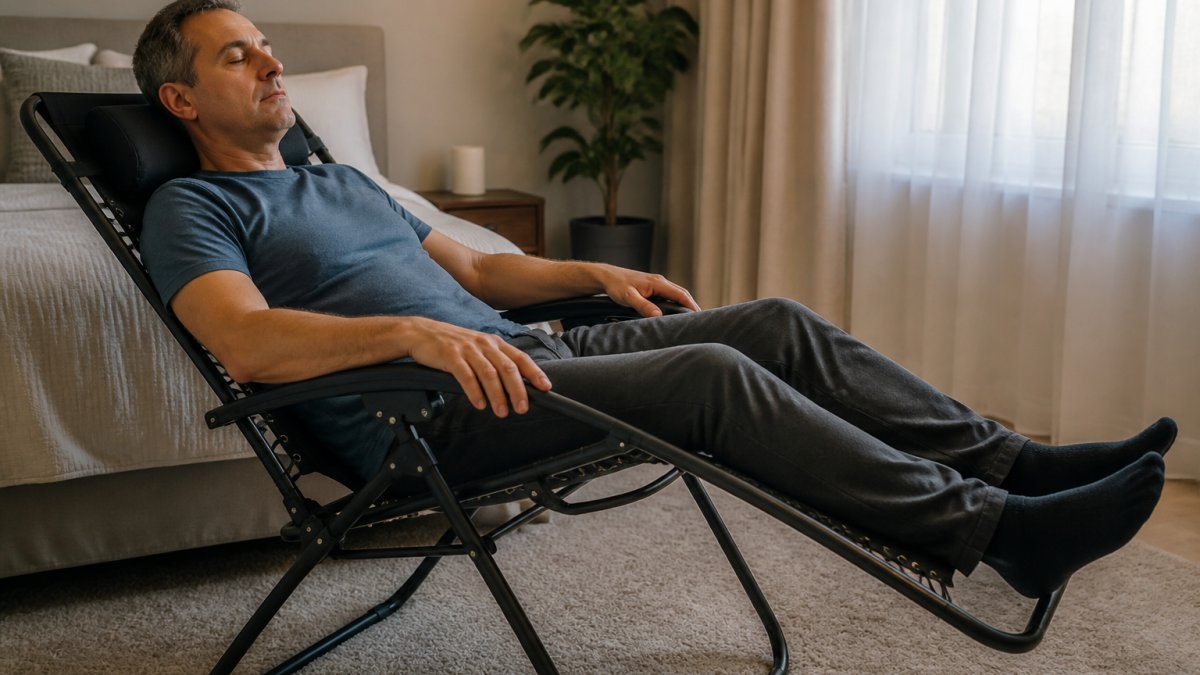
Step 1: Pick the spot and clear the space
Choose a quiet room away from foot traffic, and give the chair room to recline fully without hitting a wall, table, or doorway.
Step 2: Set the recline before you sit down
Adjust the chair to roughly the position you want first, then sit and fine-tune. Reclining from a partly back position is easier on your back than starting fully upright.
Step 3: Check your neck and lower back
Once reclined, notice where your head sits. The headrest should cradle your head without tipping your chin toward your chest or pushing it back.
Step 4: Support your arms and legs
Rest your forearms on the armrests or on your torso, whichever feels natural.
Step 5: Set a timer and a wake-up cue
If you want to keep the nap short, set a gentle alarm rather than a jarring one. Placing a glass of water within reach makes the transition back to activity easier.
Fit and safety checks before you buy or settle in
- Weight and size limits. Every chair has a manufacturer-stated weight capacity and recommended user height range. Check the documentation for the specific model, do not assume a chair will fit because it looks roomy.
- Locking mechanism. Confirm the recline locks securely in the position you want. A chair that drifts back slowly while you rest can interrupt light sleep.
- Stability. Test the chair on a level, hard surface. Carpet can make some frames feel less stable, and a rocking or wobbling frame is a sign to check the assembly or the floor.
- Pressure points. Sit in the chair for a few minutes before napping. If you feel pressure at the back of your thighs, behind your knees, or under your shoulder blades, adjust the recline or add a small cushion.
- Getting in and out. Practice the motion while you are fully alert. If rising from the reclined position feels difficult, a chair with a power recline or a lift-assist feature may be easier to manage, check the manufacturer's specifications for what each model offers.
Hygiene, temperature, and waking comfortably
Fabric chairs collect dust, pet hair, and allergens over time. Follow the manufacturer's cleaning instructions for your specific model. A removable, washable cover can make upkeep easier if you nap often.
Temperature is a common complaint.
When you wake, give yourself a minute before standing. Sit up slowly, drink some water, and stretch your neck and shoulders gently.
Can You Sleep Overnight in a Zero Gravity Chair?
You can physically sleep overnight in a zero gravity chair, but it's a different experience from napping, and most people find it less restorative than a bed.
Why a nap and a full night are not the same thing
During a short nap, you spend most of the time in lighter stages of sleep, without the deeper stages and brief awakenings of a full night.
Over a full night, the picture changes. Sleepers normally shift position many times, and a recliner limits how much you can roll, turn, or stretch. That restriction is what most people notice first, not the recline angle.
What tends to make overnight chair sleep harder
- Position changes are limited. In bed you can roll onto your side or stomach without thinking about it. In a chair, you stay roughly where the frame puts you.
- Arm and shoulder support. Armrests that feel fine for a 30-minute nap can create pressure over a longer stretch, especially if your shoulders are wider than the chair's interior.
- Temperature swings. You cannot easily reach for or kick off a blanket the way you can in bed, and the chair's fabric may hold heat differently than sheets.
- Head and neck drift. A headrest that cradles your head when you are awake may not hold it in a neutral position once your muscles relax in deeper sleep.
- Getting up in the dark. If you wake during the night, reclining and rising from a chair is a different motion than sitting up in bed, and it takes more coordination.
Who tends to try it, and why
Some people do sleep in zero gravity chairs regularly, most often as a temporary arrangement, during recovery from a procedure, while traveling, in a small space, or when a bed is unavailable.
If you want to test overnight use, build up gradually. Start with your normal nap length, then try a longer evening rest before committing to a full night. Pay attention to how you feel in the first few minutes after waking, refreshed, or stiff and groggy.
The bottom line on overnight use
A zero gravity chair may be comfortable for short periods of rest or napping. For overnight use, follow the manufacturer’s instructions for the specific chair and do not assume a model is designed or approved for sleeping through the night.
Disadvantages of Zero Gravity Chairs for Napping
While these chairs offer comfort for short rest, they have real limitations.
Space and cost. Zero gravity chairs take up room and represent a significant investment. For occasional naps, a regular chair or bed might make more sense.
Limited long-term comfort. After an hour or two, many people feel pressure points developing, and the lower back or hips may start to ache.
Getting in and out. If you have mobility issues, reclining and rising from a zero gravity chair can be difficult. Some chairs have power recline features that help, but these add complexity.
Not a medical solution. These chairs don't treat back pain, circulation problems, or sleep disorders. If you have a medical condition, talk to a healthcare provider about what will help.
Noise and movement. Some zero gravity chairs make noise when they recline or adjust, which can disturb others in your home. The chair may also shift slightly when you move, interrupting light sleep.
Hygiene considerations. Fabric chairs can collect dust and allergens. Regular cleaning helps, but chairs are harder to clean thoroughly than bed linens.
Temperature regulation. You can't adjust your position easily if you get too hot or cold. In bed, you can kick off blankets or add layers quickly.
Best Chairs for Napping: What to Look For
When choosing a zero gravity chair for napping, focus on these features.
Proper recline range. The chair should recline smoothly to a true zero gravity angle. Test it in person if possible. Your legs should be slightly elevated compared to your heart.
Adequate padding. Look for chairs with thick, high-density foam. Thin padding gets uncomfortable quickly. Thicker cushioning supports longer rest periods.
Good headrest design. The headrest should support your head without pushing it forward. Your neck should feel cradled, not strained.
Armrest quality. Padded armrests make a difference. Hard armrests can dig into your arms during sleep.
Size that matches your body. A chair that's too narrow or shallow won't feel comfortable. Sit in it before buying if you can.
Easy adjustment. Manual recline works fine for naps. Power recline adds convenience but also cost. Choose based on your needs.
Durable materials. Look for quality upholstery and sturdy frames that hold up through regular use.
Quiet operation. If you live with others, a chair that reclines silently matters. Some mechanisms are noisier than others.
Consider your specific situation. If you nap daily, invest in a higher-quality chair. If naps are occasional, a simpler model may work fine.
Conclusion
You can use a zero gravity chair for naps. The elevated, reclined position supports comfortable rest for short periods, and many people find it more relaxing than sitting upright or lying flat.
The key is understanding your own comfort. Start with short naps and see how your body responds. If you wake up refreshed, the chair is working for you; if you feel stiff or uncomfortable, it may not be the right fit.
For those building a home wellness space, RejuvaZone offers massage chairs designed with full-body support and comfort in mind. Our selection includes options with advanced reclining features, quality padding, and ergonomic design suited to short rests and longer relaxation sessions. Explore our collection to find a chair that matches your wellness goals and daily routine.
Frequently Asked Questions
Is it okay to sleep in a zero gravity chair?
Yes, zero gravity chairs can be used for naps and rest. The reclined position with elevated legs distributes body weight evenly and may support relaxation. However, overnight sleep differs from daytime naps, and comfort depends on chair quality, proper setup, and individual preference. If you have back pain, acid reflux, or other health concerns, consult a healthcare provider before using a chair as a regular sleep surface.
What are the best chairs for napping?
The best chairs for napping offer adjustable recline angles, neck and lumbar support, and durable construction. Look for models with quality padding, breathable upholstery, and smooth adjustment mechanisms. Premium options often include memory foam, heating functions, and ergonomic design. Consider your space, weight capacity, and whether you want additional features like massage or zero gravity positioning.
What are the disadvantages of zero gravity chairs?
Zero gravity chairs may feel less supportive than a bed for extended sleep, can be bulky for small spaces, and may require regular adjustment to maintain comfort. Some users find the reclined position uncomfortable for neck support without proper pillows.
Can you sleep overnight in a zero gravity chair?
While some people sleep overnight in zero gravity chairs, they are designed primarily for naps and rest rather than full-night sleep. Overnight use may lead to stiffness, neck strain, or reduced sleep quality compared to a bed. If you want to use one for overnight sleep, test it with short sessions first and ensure adequate pillow support for your head and neck.